San Diego magic mushrooms are psilocybin-containing fungi that have become a subject of local curiosity, scientific research, and public-policy discussion. The terms “magic mushrooms,” “psychedelic mushrooms,” and “psilocybin mushrooms” are often used interchangeably, but understanding their biology, legal status, and health risks requires more than promotional descriptions or anecdotes. This guide provides an educational overview for San Diego County readers.
This article addresses the San Diego region specifically. For broader statewide information, see our California Magic Mushrooms guide. Information below is educational and does not constitute legal or medical advice.
View our Mushroom Products

B+ Mushrooms
$40.00
Blue Meanie Mushrooms
$40.00
Golden Teacher Mushrooms
$40.00
Jedi Mind Fuck Mushrooms
$40.00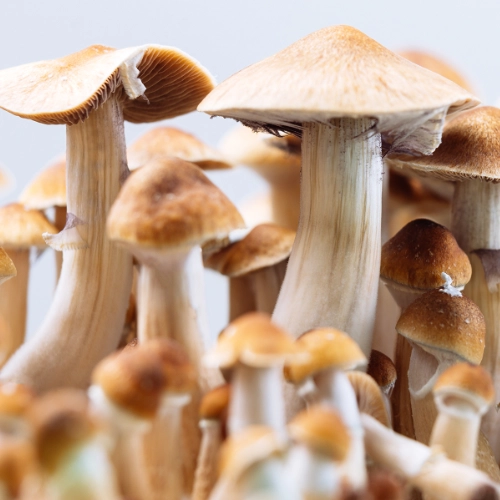
Thai Tanic Mushrooms
$40.00
What Are San Diego Magic Mushrooms?
The phrase “San Diego magic mushrooms” is a geographic search term, not a distinct fungal species. Certain mushrooms in the genus Psilocybe, among others, naturally contain psilocybin. After entering the body, psilocybin is converted to psilocin, which influences serotonin signaling, especially at the 5-HT2A receptor. Effects can include altered visual perception, changed awareness of time, intensified emotions, and changes in thought patterns.
Different species and samples can contain varying amounts of active compounds. Informal variety names do not establish a laboratory-tested composition or predictable effect. The appearance of a wild mushroom also cannot reliably establish identity; potentially toxic look-alikes can pose serious risks. Readers interested in the scientific mechanisms can explore How Magic Mushrooms Work on the Human Mind.
San Diego Magic Mushrooms and the Law
As of October 2026, psilocybin and psilocin are Schedule I controlled substances under federal law. California has not broadly legalized recreational possession or commercial sales of psilocybin mushrooms. Local attitudes and decisions about enforcement priorities are not the same as legal permission to possess, distribute, or sell a controlled substance.
California lawmakers have considered several policy proposals, including Senate Bill 58. That bill proposed decriminalizing certain activities involving specified psychedelics but was vetoed in 2023. It did not establish legal retail access. For reliable statewide context, consult the governor’s official SB 58 veto message and current California legislative materials.
San Diego residents should be cautious about claims that psilocybin has been “legalized” locally. Enforcement discretion, municipal policy, medical research authorization, and statewide criminal law are separate issues. Seek advice from a qualified attorney for questions involving a particular activity or location.
Why Is Psilocybin Being Studied?
Researchers are investigating psilocybin-assisted treatment in tightly managed clinical settings. Studies often involve participant screening, trained supervision, structured psychological support, monitoring, and follow-up. These safeguards make clinical trials different from unsupervised experiences. Early results have generated scientific interest, but individual studies may be small, use highly selected participants, or have limited long-term follow-up.
- Depression: Clinical studies have explored changes in symptoms, but questions remain about the durability of response and adverse effects.
- Substance-use disorders: Researchers are assessing possible roles in supervised interventions; broad effectiveness has not been established.
- Distress in serious illness: Some research examines depression or anxiety associated with life-threatening diagnoses.
- Other conditions: Claims about PTSD, pain, and other uses require condition-specific evidence rather than assumptions based on unrelated studies.
The U.S. Food and Drug Administration discusses psychedelic drug development and clinical investigation standards. Psilocybin has not been FDA-approved as a medical treatment as of October 2026. Research participation should occur only through properly authorized study programs.
San Diego’s Research and Public-Health Context
San Diego County has a large academic, biotechnology, and healthcare community, making questions about emerging mental-health research relevant to local readers. However, general regional interest does not establish that any particular local clinic offers an approved psilocybin therapy. Before relying on a program’s claims, verify its institutional affiliation, research registration, clinical oversight, and the legal basis on which it operates.
People can explore publicly listed studies through ClinicalTrials.gov. A trial listing does not mean a treatment is approved, suitable for everyone, recruiting locally, or guaranteed to benefit participants. Eligibility criteria, informed consent, and oversight are essential.
History, Indigenous Traditions, and Modern Interest
Psilocybin-containing mushrooms have important histories in several Indigenous Mesoamerican traditions. Practices, meanings, and ceremonies vary between communities and should be described respectfully rather than simplified into modern wellness slogans. Western scientific and popular interest expanded notably in the twentieth century, followed by renewed clinical research in more recent decades.
In San Diego, contemporary conversations occur within a wider California landscape of scientific inquiry, cultural discussion, and policy proposals. The region’s beaches, parks, and outdoor culture should not be portrayed as inherently safe places for consuming psychoactive substances; psychological and physical risks are not eliminated by a familiar environment.

Risks, Misidentification, and Other Safety Concerns
Psilocybin experiences may include nausea, panic, paranoia, confusion, and impaired judgment. Changes in pulse and blood pressure may matter for people with underlying conditions. Certain psychiatric histories or medications can make psychoactive experiences especially concerning. An individual’s reaction cannot be reliably predicted from a product name or someone else’s experience.
- Psychological concerns: Anxiety, frightening perceptual changes, or disorientation may occur.
- Physical concerns: Nausea, loss of coordination, increased heart rate, or blood-pressure changes can be significant.
- Medication and health factors: Potential interactions and preexisting mental-health or cardiovascular conditions require medical assessment.
- Poisonous look-alikes: Wild mushroom misidentification can cause severe poisoning independent of psilocybin.
- Urgent symptoms: Seizures, loss of consciousness, severe agitation, or other alarming symptoms warrant emergency assistance.
For suspected poisoning, the U.S. Poison Control network can provide guidance at PoisonHelp.org. This article does not provide instructions for consumption, cultivation, or dosage.
Understanding the Language: Psilocybin, Psilocin, and ‘Shrooms’
Psilocybin is a naturally occurring compound found in certain mushrooms; psilocin is the closely related compound responsible for much of the psychedelic activity after conversion in the body. Shrooms is an informal term that does not identify a particular species, quality, or chemical composition. For background on terminology and popular culture, read The Word “Shrooms”: A Fascinating Dive into Magic Mushrooms.
How to Evaluate San Diego Psilocybin Information
When reading about San Diego magic mushrooms online, distinguish educational reporting from advertising, legal analysis from opinion, and peer-reviewed studies from personal accounts. Check whether the information is dated, whether it applies to the City of San Diego or the wider county, and whether a medical claim is backed by studies in humans rather than testimonials.
Relevant questions include: Has a legal proposal actually become law? Does an article identify the study population and limitations? Is an organization describing a clinical trial or a commercial service? Does it distinguish chemical testing from marketing names? Those distinctions matter more than a promise of a particular experience.
Where to Find Reliable Psilocybin Information
- Federal research oversight: FDA guidance for psychedelic clinical investigations.
- Clinical research listings: ClinicalTrials.gov for registered studies and recruitment status.
- California policy: California Legislative Information for bills and enacted law.
- Statewide background: Our California Magic Mushrooms article.
San Diego Magic Mushrooms: Frequently Asked Questions
These questions address common searches about psilocybin in San Diego County. The answers provide general educational information, not individualized medical or legal advice.
California has not legalized general possession or retail sale of psilocybin mushrooms, and psilocybin and psilocin remain controlled under federal law. A local enforcement policy does not necessarily change those legal restrictions.
Magic mushrooms is an informal name commonly used for psilocybin-containing fungi. Not all mushrooms contain psilocybin, and even similar-looking species can differ greatly in chemistry and safety.
Psilocybin has not been FDA-approved as a medical treatment as of October 2026. Authorized research studies are different from routine approved medical care, and prospective participants should verify a trial’s oversight and eligibility rules.
Risks can include panic, confusion, nausea, impaired judgment, changes in heart rate or blood pressure, and serious harm from toxic mushroom misidentification. Medical and psychiatric history can affect individual risk.
The FDA publishes information on psychedelic-drug development, and ClinicalTrials.gov lists registered studies. Readers should review study dates, eligibility criteria, supervision, and evidence limitations.
This page focuses on questions relevant to San Diego County and local readers, while our California Magic Mushrooms article discusses statewide policy, scientific context, and broader background.
Conclusion: A Science-Based San Diego Guide
The most useful starting point for understanding San Diego magic mushrooms is to distinguish biological facts, evolving clinical research, California’s current legal framework, and individual safety concerns. Seek up-to-date sources, be cautious about promotional claims, and revisit official guidance as research and policy develop.