California magic mushrooms are fungi that contain psilocybin, a naturally occurring psychedelic compound. Interest in their biology, history, legal status and possible clinical applications has grown. This guide separates established facts from emerging findings, and explains the issues California residents should understand.
For a local perspective, see our San Diego Magic Mushrooms guide. This article considers California statewide.
View our Mushroom Products

B+ Mushrooms
$40.00
Blue Meanie Mushrooms
$40.00
Golden Teacher Mushrooms
$40.00
Jedi Mind Fuck Mushrooms
$40.00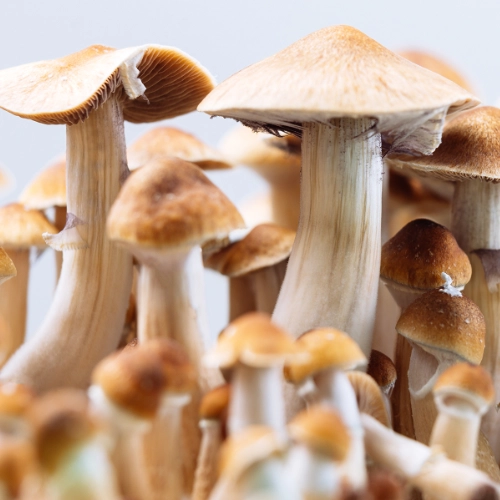
Thai Tanic Mushrooms
$40.00
What Are California Magic Mushrooms?
“Magic mushrooms” is an informal term for several fungal species that contain psilocybin. The body converts psilocybin into psilocin, which interacts with serotonin receptors and can alter perception, emotion and sense of time. Experiences vary considerably and are not always pleasant or beneficial.
Different fungal species can look alike, while their chemical composition varies. Visual identification is unreliable, and poisonous wild mushrooms can cause serious injury when mistaken for other species. Scientific descriptions therefore distinguish taxonomy and tested chemical composition from informal strain names. For additional terminology and historical context, see our article on the word “shrooms”.
Are Magic Mushrooms Legal in California?
As of October 2026, California has not legalized general recreational possession or commercial sale of psilocybin mushrooms. Psilocybin and psilocin remain controlled under federal law. Some municipalities have adopted enforcement priorities, but those policies are not equivalent to statewide legalization.
California Senate Bill 58 proposed decriminalizing certain activities involving psychedelics, but the governor vetoed it in 2023. The bill did not take effect. Read the official veto message and current state laws when assessing legal claims. Research exceptions, distribution and possession can be governed differently; this article is not legal advice.
What Does Research Say About Psilocybin?
Clinical researchers are studying supervised psilocybin-assisted interventions. Some trials report promising outcomes in carefully selected populations, but their findings cannot be generalized to unsupervised use. Evidence varies by condition, study design and follow-up duration.
- Depression: Studies have investigated possible changes in symptoms, with ongoing questions about durability and risks.
- Substance-use disorders: Early research explores possible applications but has not established broad treatment recommendations.
- Distress related to serious illness: Trials have examined anxiety and existential distress in selected groups.
- Other conditions: Evidence for PTSD, chronic pain and other proposed applications remains under investigation.
Psilocybin is not an FDA-approved medical treatment. The FDA’s psychedelic drug resources explain how clinical evidence and regulatory review differ from popular medical claims. Our related educational article, How Magic Mushrooms Work on the Human Mind, explores the subject further.
Cultural History and California’s Interest
Psilocybin-containing mushrooms have historical and ceremonial significance in several Indigenous Mesoamerican communities. Those traditions are culturally distinct and should not be conflated with present-day recreational practices or generalized wellness claims.
Contemporary California discussions involve mycology, medical research, public health and legislative policy. Interest in these topics does not demonstrate universal acceptance, clinical effectiveness or a change in legal status.

Risks and Important Safety Questions
Psilocybin can produce panic, confusion, nausea, impaired judgment and changes in heart rate or blood pressure. Certain psychiatric histories, medical conditions and medications may increase concern. The risks of misidentified wild mushrooms are separate and can be life-threatening.
- Psychological: Distressing experiences may involve fear, disorientation or persistent anxiety.
- Medical: Interactions and cardiovascular effects deserve professional evaluation.
- Identification: Similar-looking species may contain dangerous toxins.
- Emergency symptoms: Severe confusion, seizures or loss of consciousness warrant urgent medical care.
This educational article does not provide individualized medical advice or instructions for use. People interested in research participation should speak to authorized clinical teams about screening, informed consent and monitoring.
How to Evaluate California Psilocybin Information
Check whether claims concern the entire state or a particular city, whether legal changes were enacted rather than proposed, and whether medical findings come from controlled trials or testimonials. For science, start with peer-reviewed research and federal regulators; for law, start with California’s official legislative record. Online promotional descriptions cannot establish purity, potency or safety.
Our San Diego-focused mushroom guide provides additional geographic context without treating local policies as statewide rules.
What Comes Next for California?
Proposals concerning regulated treatment, research access and criminal enforcement continue to be debated. Their outcomes and timelines should not be presumed. California magic mushrooms are best understood through accurate science, history, safety information and the law in force today.
The frequently asked questions below summarize the key points, followed by further research and legal sources.
California Magic Mushrooms: Frequently Asked Questions
These frequently asked questions provide general educational information about psilocybin in California. They are not medical or legal advice.
Psilocybin and psilocin are controlled substances under federal law, and California has not legalized their general possession or retail sale. The scope and status of local enforcement priorities can differ; those policies should not be mistaken for statewide legalization.
Psilocybin is a naturally occurring compound found in certain fungi. The body converts psilocybin into psilocin, which acts on serotonin-related signaling pathways and can change perception, emotions, and cognition.
As of October 2026, psilocybin has not received FDA approval as a treatment for a medical condition. Researchers are studying it in controlled clinical trials, including for certain depression-related conditions.
Possible adverse effects include panic, confusion, nausea, impaired judgment, and increased heart rate or blood pressure. Effects can be especially concerning for people with certain psychiatric or cardiovascular conditions, and interactions with medications require professional medical evaluation.
California-wide information concerns state law, scientific research, and broader public-health issues. San Diego-specific information addresses local context and resources; readers can consult our separate San Diego Magic Mushrooms guide for that focus.
Research and Legal Sources
For authoritative updates, consult the FDA’s psychedelic drug research resources, the FDA’s 2026 clinical investigation guidance, and California’s legislative record of SB 58. Legislation, regulations, and clinical evidence may change.
Explore and Shop our Fresh, Potent, California Magic Mushroom Strains
-
 Thai Tanic Mushrooms$40.00
-
 Jedi Mind Fuck Mushrooms$40.00
-
 B+ Mushrooms$40.00
-
 Blue Meanie Mushrooms$40.00
-
 Golden Teacher Mushrooms$40.00